
10 Common Mistakes When Buying Printed Umbrellas (and How to Avoid Them)
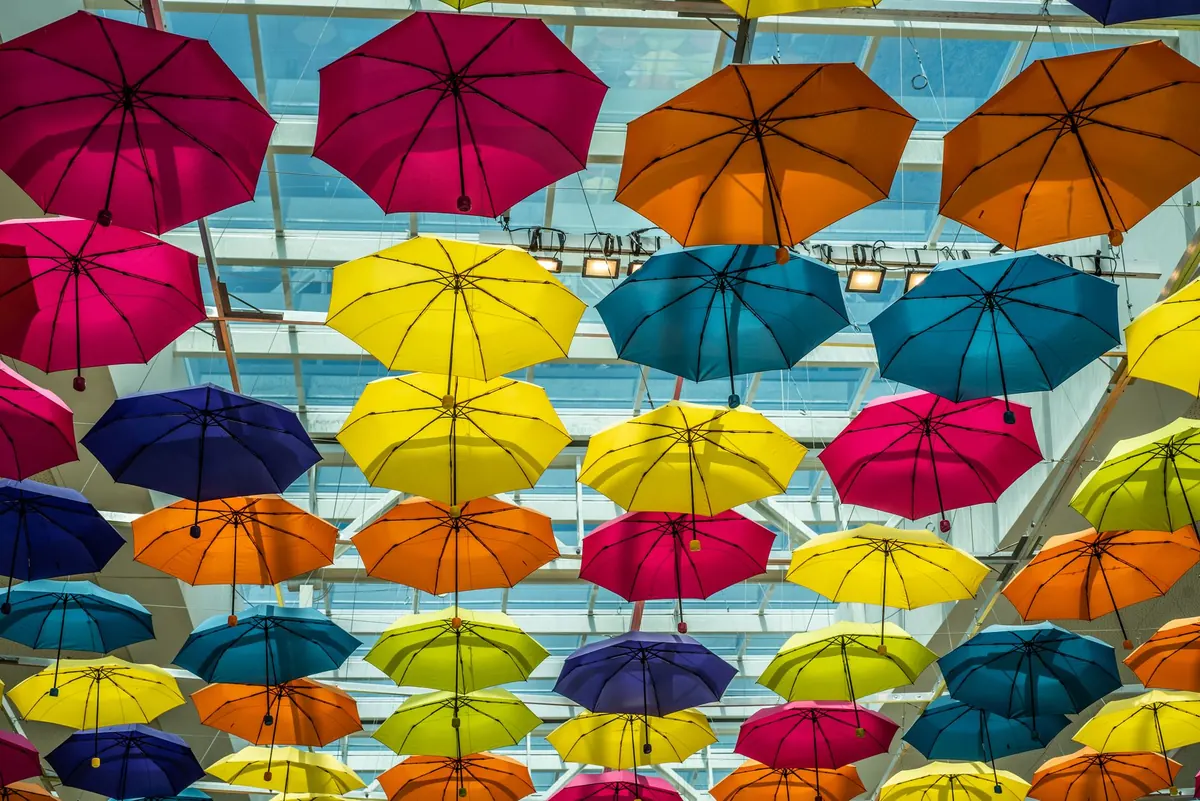
A printed umbrella is one of the few promotional items people genuinely keep. It gets used in the rain, borrowed, forgotten, found again, and seen by hundreds of people on a single wet commute. That makes it a wonderful canvas — and a brutal one for anyone who gets the details wrong. Most disappointing printed umbrellas were not ruined at the printer. They were ruined in the briefing: a mockup approved too quickly, a fabric chosen to save a little money, a logo nudged a centimetre too far left. Here are the ten mistakes that come up again and again, and what to do instead.
Before You Ask for a Quote
1. Comparing prices for products that aren't the same
Two quotes for "a printed umbrella" can describe wildly different things. One might be a 190T polyester canopy with a steel frame and eight panels; the other a heavier pongee canopy with fibreglass ribs and a wind vent. The price gap tells you almost nothing unless the specification matches.
Write your spec down before you shop, and send the same version to every supplier:
- Canopy fabric and weight, and whether it has any water-repellent or UV treatment
- Panel count, diameter, and whether the canopy is single or double layered
- Frame type, rib material, and whether it opens manually or automatically
- Handle style, tie strap colour, and sleeve or case
- Print method, number of colours, and print positions
- Quantity, lead time, and what happens if a piece arrives faulty
2. Never asking which print method will be used
Screen printing lays down solid, opaque colour and suits one to three bold colours; each extra colour adds a pass and a cost. Digital transfer and dye-sublimation methods handle full colour, gradients and photographs, but the finish can feel slightly different under the thumb, and results vary with the fabric. Neither is better in the abstract — ask which method the supplier intends to use for your artwork and why. If the answer is vague, that's your cue to look elsewhere.
Design Mistakes That Only Appear on a Curved Canopy
3. Designing on a flat rectangle
A canopy is a dome made of panels, not a page. A wide horizontal logo will wrap around the curve, so from one side it reads perfectly and from the other it looks squashed or disappears over the edge. A tall narrow design often looks lost once it's stretched across two panels.
Ask for a proof showing the umbrella open, on the curve, from a normal viewing angle — not just a flat artboard with your logo pasted in the middle.
4. Artwork that's too fine, too small or too busy
Hairlines, soft gradients, drop shadows and tiny taglines are the first things to vanish. So is pale ink on pale fabric. A useful test: shrink your design down until it's about the size of a thumbnail. If you can't tell what it says, it won't read from across a street either.
Simplify. One clear mark beats four competing elements. Convert small text to a solid, heavier weight, and avoid placing critical detail on light colours where contrast is weakest.
5. Ignoring seams, edges and the valance
Seams slice through artwork. A logo centred on the front of an eight-panel umbrella can end up bisected by a stitch line, or pushed so close to the canopy edge that the last letter curls with the fabric. Ask your printer where the seams fall relative to your design, and keep important elements centred within a panel with a comfortable margin.
Check the smaller real estate too: the valance along the bottom edge, the tie strap, and the inside of the canopy. A repeated mark on the valance is often more visible than a large one on the dome.
6. Forgetting how it looks when it's closed
Most of the time people see an umbrella furled in someone's hand, from the side. A design that works beautifully on the open dome may end up facing the wrong way, hidden in the folds, or covered by the strap when closed. Request a proof of both states before you approve.
Colour and Fabric Mistakes
7. Assuming colours will match without a reference
Your screen, the mockup and the ink are three different worlds. If your brand colour matters, supply a Pantone reference and ask directly whether it can be matched and how close the result will be. On dark or deeply saturated canopies, printers often need a white underprint so the ink doesn't sink into the fabric — and that underprint can shift the final shade. The same ink on a red canopy and a white canopy will never look identical. Ask what's realistic, then decide whether a close match is good enough.
8. Treating every fabric as fade-proof
Sunlight is what kills a print, and no canopy is immune. Thinner, cheaper fabrics tend to break down and fade sooner, and an umbrella left on a car dashboard will always age faster than one that's used and stored indoors. Ask about the fabric weight and any UV-resistant treatment, choose strong contrast over delicate pastels, and be realistic about how long a hard-working umbrella will look crisp. Storing it dry rather than damp helps the fabric and the print alike.
Mistakes in the Order Itself
9. Skipping the pre-production proof
A digital mockup hides a great deal: seam positions, ink coverage, how a colour behaves on the actual fabric. If you're ordering in any serious quantity, a pre-production sample is the cheapest insurance you'll buy. Even an unprinted canopy in your chosen fabric tells you whether the weight and handle feel right. While you're at it, check the frame — ribs that flex, a canopy that's properly attached at the tips, and a vent that lets wind through instead of turning the umbrella inside out.
10. Leaving it too late
Rush orders push you towards whatever's in stock and whichever print method can be turned around fastest, which is exactly how compromises creep in. Build time into your schedule for artwork revisions, proof approvals, printing, curing and shipping — then add a buffer. If the umbrellas are tied to an event or a season, work backwards from that date before you start browsing.
A Short Checklist Before You Approve Anything
- Written spec agreed, so every quote is for the same umbrella
- Print method confirmed, with the reason it suits your artwork
- Curved proof of the open canopy, plus a closed view
- Seam and edge positions checked against your design
- Pantone reference supplied; underprint question answered
- Fabric weight, UV treatment and handle style signed off
- Physical sample or pre-production proof in hand
- Lead time, delivery date and returns policy in writing
None of this is complicated, but it only takes one shortcut to turn a good idea into an umbrella that stays folded at the back of a cupboard. Ask the questions early, approve on a curved proof rather than a flat mockup, and spend a little more on fabric and frame quality if you can — those are the parts people actually notice on a wet Tuesday.
Photo: Gabi Radde / Pexels